
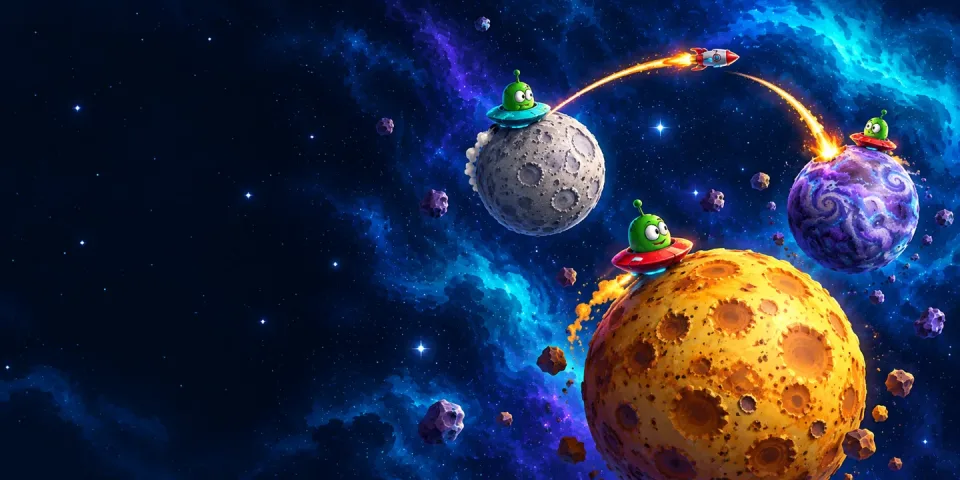
A shot in Zimblops – Orbital War can leave the launcher pointing towards an opponent and still finish somewhere else. The useful question is where its flight begins to change. Watching the departure, the bend and the landing gives you a clearer reason for your next adjustment.
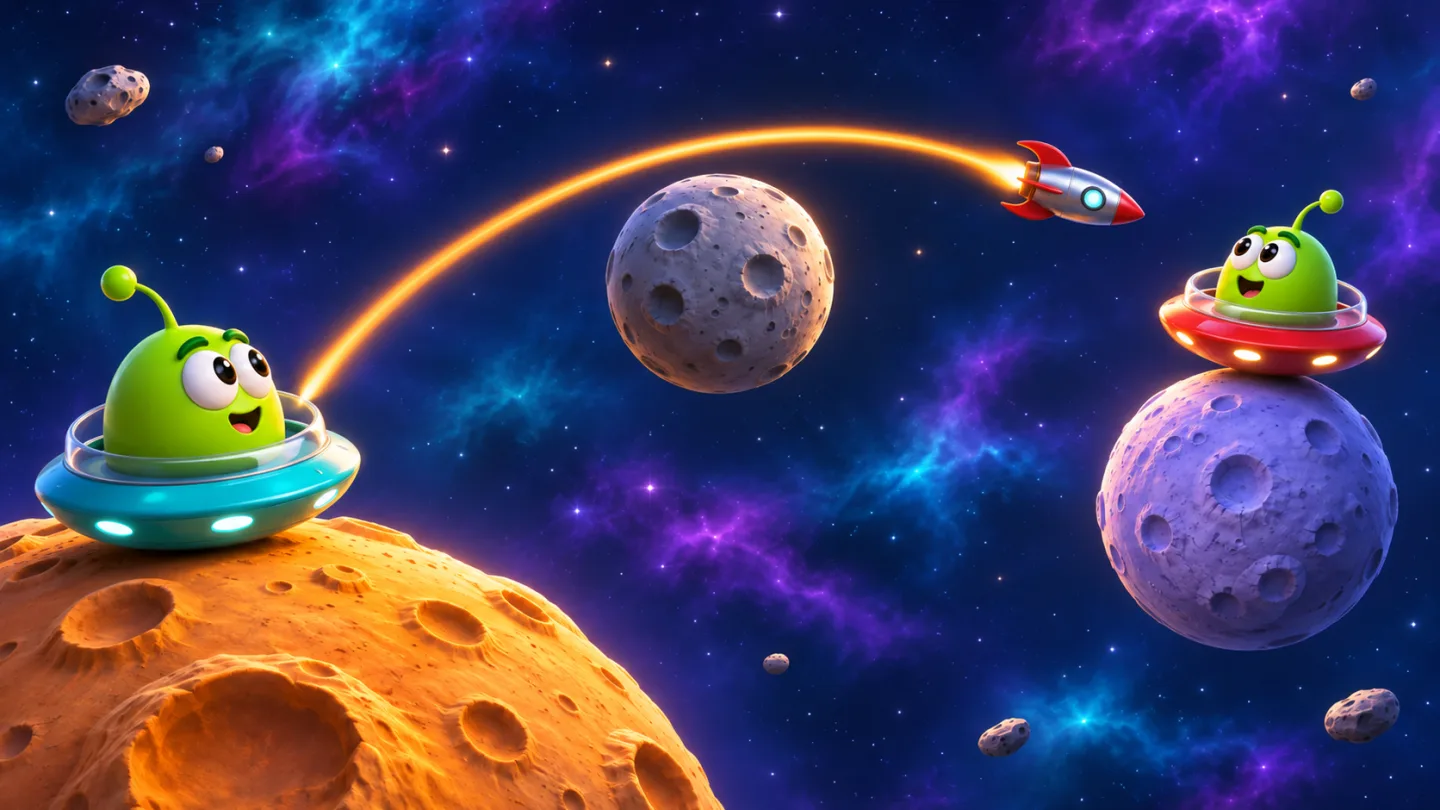
Read the space around the target
Before choosing your shot, find your own planet, the opponent’s position and the other planets between them. Think about the space the projectile would need to cross. A nearby world can matter even when the opponent stands on a different one, because the flight travels through a field of planetary gravity.
Start with a route you can follow on screen. If your proposed path passes close to a planet, make that the part of the flight you watch most closely. Aiming directly at the character is only the opening direction; the rest of the route develops as the projectile moves.
Notice the departure before judging the miss
Watch what happens close to the firing position first. Does the shot leave the surface with room to travel? Does it reach open space, or meet nearby ground? A projectile that hits a ridge beside the launcher has given you a different problem from one that crosses the arena and passes the target.
This short check keeps the next decision specific. When a crater rim interrupts the departure, inspect the current terrain before repeating the attempt. Our Zimblops terrain guide looks at those changed surfaces in more detail.
Follow the bend around a planet
Once the shot clears the launch area, watch where it starts to turn. Planetary gravity pulls on the moving projectile, so its direction can change along the way. A curved approach can bring it towards a part of the arena that the opening aim did not point at directly.
For example, imagine a shot passing beside another planet before reaching the opponent’s world. Watch that pass as a separate part of the attempt. Does the route carry on towards the opponent, bend into a surface, or turn away from the area you wanted to reach? Use the result visible in your match to decide which part of the approach needs another look.
Compare one adjustment at a time
Zimblops lets you choose an angle and adjust power. When you want to understand their effect, keep the weapon and starting situation as similar as you can, then change one setting. Follow the same stretch of the next flight and compare what happens there.
Training is a useful place to explore this without treating every attempt as a winning shot. Focus on a small question, such as whether the departure clears the planet or whether the flight reaches the far side of a gap. In a battle, check the new position and terrain before using the previous attempt as a reference.
Carry the observation into the next turn
After the shot resolves, remember where the flight changed and where it ended. That gives you a concrete observation to take into the next turn. For a shared-screen match, both players can watch the same route, while making their own decisions from different firing positions.
See the local multiplayer guide for setting up a duel on one device. Visit the Zimblops game page for gameplay images and the official download links.