
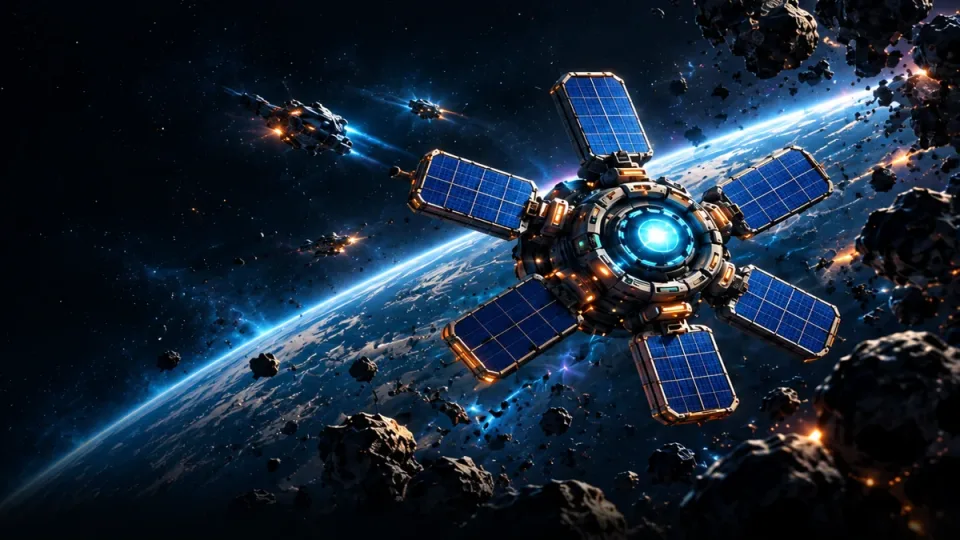
A gun is only one part of a working defense. It also needs energy, a connection to the rest of the base, and the minerals that paid for it. In Iron Nebula: Tower Defense, those dependencies turn an asteroid field into a series of decisions about where to build next.
Build a network in space
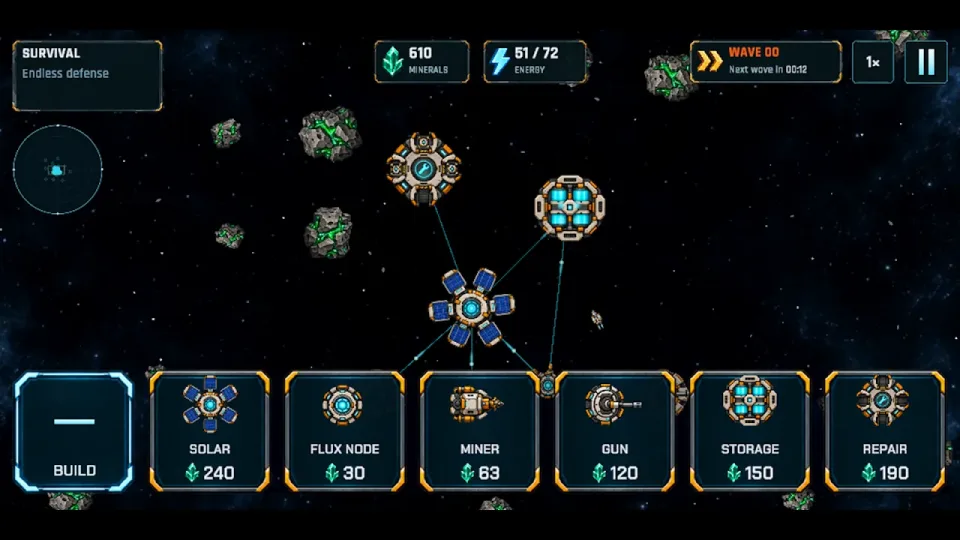
Your outpost grows through connected stations. Solar stations supply energy, miners extract minerals from asteroids, and weapons defend what you have built. Expanding your reach brings more resources within range, but it also gives you more ground to protect.
That makes the shape of the base part of the strategy. A station’s position matters alongside its role: an expansion that looks profitable can leave an exposed section of the network, while a compact base can make it harder to reach the next resource pocket.
Balance growth with the next attack
Mining gives you the means to build, but the economy and the defenses share the same energy network. More guns do not remove the need for power, and more miners do not remove the need to keep them safe. You are building a system whose parts have to support one another.
A useful way to read the field is to ask three questions: where can the base get its next minerals, how will energy reach that expansion, and what will protect it? These are the foundations of the game, rather than a fixed build order. The answer depends on the space around your outpost and the pressure from the attacking fleet.
A tower defense game for people who like building systems
Iron Nebula combines space tower defense with base building and resource management. If you enjoy working out how an economy and its defenses fit together, the connected outpost is the place to start. Looking at a damaged base can be as useful as looking at a successful one: it shows which part of the system needed more support.
See authentic screenshots and the official Android download link on the Iron Nebula: Tower Defense game page.